


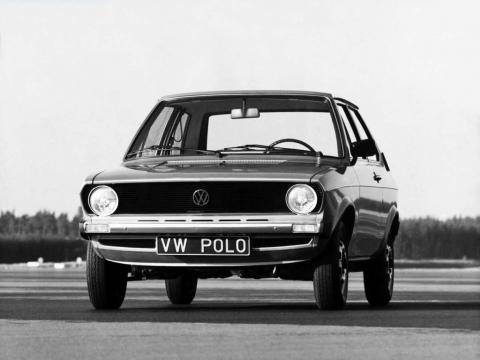
Volkswagen South Africa has a reputation for making inspired product planning decisions aimed at maximising the appeal of the brand, notable among a value conscious audience. The introduction of the Polo badge to our shores was once such example.
The story of the CitiGolf is one still regularly repeated in motoring circles around the world. Unconvinced in the early ‘80s that the introduction of the second-generation Golf would find favour in our increasingly budget conscious market, VWSA sought permission from Head Office in Germany to “reinvent” the iconic first-generation car via a vibrant styling reskin, and equally quirky marketing campaign. “Red, Yellow, Blue…”, anyone?
While the Citi would prove a massive sales success until in 2009 the pressures of modern safety advances eventually caught up with it, the burgeoning gap in both overall dimensions and asking price between the Golf and Citi would prompt VWSA to make another ultimately pertinent product placement decision.
Built on an Audi 50 platform, while the first-generation Polo debuted on the European scene in 1975, it wasn’t until the third-generation version broke cover in 1994 that VWSA’s interest was piqued. And even then, it wasn’t the Polo known to the European market that would eventually be introduced to South Africa. Indeed, it would be the somewhat more affordable cousin of the VW, the SEAT Ibiza that would provide the platform for what our market would know as the Polo Playa (“playa” is the Spanish word for, “beach”). Assembled in Kariega (previously known as Uitenhage) on the Golf Mk2 platform, these underpinnings could not only accommodate a range of locally produced fuel-injected engines but, crucially, this package could also be ordered in a booted “Classic” body style…
South Africa would gain its first taste of a “proper” Polo in 2002 with the local introduction of the fourth-generation car. With its quirky styling – including distinct round headlamp designs – this model would spawn a 110 kW GTI version, as well as wildly entertaining 1.9 TDI derivative boasting 310 N.m worth of torque. And, lest we forget as in more recent times the new T-Cross continues to sell in large volumes, 2007 saw the introduction of the bumped-up Cross Polo.
So popular would SA’s first Polo prove that by the time the fifth-generation car arrived, it offered VWSA a perfect opportunity to rekindle the spirit of the discontinued CitiGolf, by repackaging this outgoing version into the nameplate that, to this day, consistently tops monthly passenger car sales in our market – the Polo Vivo.
Coinciding with some careful, price-appropriate deletion of spec in order to achieve an optimally priced Vivo package, the perceived build quality and internals of the all-new, fifth-generation Polo took a massive step forward. Closer in both packaging and spirit than ever before to its big-brother Golf, this generation of Polo would capture both the European- and World Car of the Year awards.
Scheduled for a mid-life update in early 2022, the current, sixth-generation Polo is built on VW’s modern MQB platform and has, once more, closed the gap in terms of sophistication to its modern Golf sibling. That said, the award-winning outgoing model made for an even more compelling current Vivo offering.
From fleet- to hire car companies, first-time buyers and, indeed, pensioners, there’s a welcome honesty and sense of familiarity that runs through the Polo package, new and old. Generally, slightly more costly to purchase new than their respective rivals on the day, the reward for signing on the dotted line is broadly above average aftersales service from an extensive network of dealerships, countrywide, ease-of-use in most driving conditions and strong resale values down the line. These are just some of the reasons Polo and Polo Vivo products remain sought after on the auction floor, too.
As Hartmut Warkuß, the designer responsible for the first- and, indeed, the fourth-generation Polo once put it; "It has nice proportions and clear lines. Which makes it convincing and self-explanatory. This is a design which will still work for years to come. For me, it is comparable with a picture that would still make sense upside down! It is a nice car."
Fun fact:
1st gen Polo (1975) 6th gen Polo (2021)
3 500 mm length 4 068 mm
1 559 mm width 1 751 mm
2 335 mm wheelbase 2 564 mm
A motoring journalist with more than 20 years’ experience, Ian McLaren will be compiling a series are articles documenting his learning curve when it comes to all things auction. Find him on Twitter, Instagram and TikTok at @IanMcLaren76.
These articles aim to offer insights only and in no way encourage reckless or hit-and-miss purchasing decisions.