


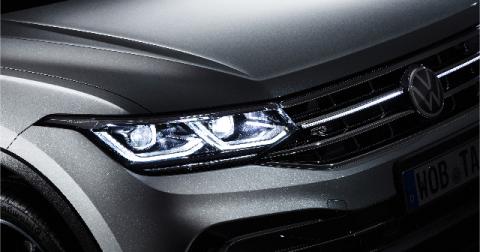
We take them for granted, but the evolution of headlamp technology has as much to do with improved efficiency of the modern motor vehicle as it has does with ultimate safety on the road. We look back at how we arrived at the use of lasers to light the way.
Long before man took to the relative comfort of a driver’s seat to get from one point on a map to another, the ability to light the path ahead once the sun has set for the day has proven crucial. This is particularly pertinent in markets like South Africa, with such a high number of annual road deaths associated with pedestrian visibility.
The efficiency with which a source of light can operate while on-the-move has also always been relative to the speeds associated with the journey. As early as the 1880s, automotive manufacturers have been exploring optimal means of providing illumination for drivers as they take the road be that surface cobbled, paved or tarred. Of the chemical-based solutions that initially found favour, acetylene proved suitably resistant to both wind and rain, while on the move.
As the internal workings of the motor vehicle grew increasingly more complex, advancements in electrical systems would allow for the broad adoption of the electrical headlamp. In 1921, Cadillac would be the first mainstream manufacturer to incorporate the functioning of headlamps within the Delco electrical ignition system of its vehicles. A challenge in the early days of these lighting setups would be how to produce a dynamo compact enough to be installed within a motor vehicle, yet powerful enough to offer worthwhile illumination.
The next breakthrough in headlamp technology would arrive some twenty years later when the 7-inch sealed-beam item began to find favour. Brighter and more focused than ever before, these units would soon be adopted as standard issue by most Commonwealth countries, and compulsory in the US from 1940. The benefit of this setup was that it combined the parabolic reflector, as well as a lens and a tungsten filament into one simpler to install unit. Crucially, it was also around this time that car designers began considering the integration of headlamps into the overall design of each project.
As more consumers took to the roads, it became apparent a system was required to allow a driver to adjust the level or strength of a headlamp’s beam depending on conditions. This advancement would allow for a brighter, more focused beam in especially dark conditions, this “high beam” offering the ability to adjust downwards when required to shield the eyes of an oncoming driver.
Pioneered by Italian motor manufacturers, the adoption of halogen lamp technology would find favour in the 1960s, notably for the richness of its resultant light quality, whilst requiring no additional energy compared with the tungsten incandescent items it would replace.
Indeed, for as long as the workings of a car’s exterior lighting technology has depended on the availability of energy from the broad operation of a motor vehicle, manufacturers have been striving to make everything associated with this process as efficient as possible. While the introduction of high-intensity discharge (HID) light systems – also known as xenon – would prove significant, regulations around this technology’s somewhat vague, easily manipulated beam would insist on the inclusion of a built-in cleaning system, as well as auto-levelling functionality to accompany their fitment into a new car’s packaging.
Pioneered through motorsport, a major breakthrough in terms of combining application and efficiency came with the incorporation of light-emitting diodes (LED) into headlamps system. While the Lexus LS 600h used this lightweight technology for its turning signals and supplementary beams, the 2007 Audi R8 was the first production model to offer full LED functionality – including the first application of daytime running lights.
Most manufactures now incorporate LED technology in some form, even if reserved solely for distinct signature lighting upgrades. As an advanced, multi-bulb headlamp arrangement these impressive lights can even be manipulated to automatically “blank out” an area of illumination around an oncoming car’s cabin. The 2013 Audi A8, for example, introduced Matrix LED headlamps made up of 25 individual LED segments able to read- and automatically adapt each beam to suit prevailing road conditions.
Can you imagine the look on the faces of those responsible for pioneering headlamp solutions in the 1880s had you told them that by the year 2020, manufacturers would be calling upon laser technology to light the way ahead? Developed by Audi for use at the 24 Hours of Le Mans motor race, this new innovation uses mirrors to direct a laser onto a yellow phosphor that then emits a light that requires half as much energy as an LED to run. This, of course, bodes well for the energy-reliant future of all-electric mobility.
For now, a set of laser headlamps fitted to the Rolls-Royce Phantom VIII offers a high beam capable of shining 600-metres into the distance.
Often overlooked, it’s good practise to inspect the working condition of the headlamps, both from the outside, as well as their respective operating functionality, before purchasing a pre-owned vehicle. Also worth noting is how labour intensive potentially replacing a unit might be – as well as how much that exercise might cost.
A motoring journalist with more than 20 years’ experience, Ian McLaren will be compiling a series are articles documenting his learning curve when it comes to all things auction. Find him on Twitter, Instagram and TikTok at @IanMcLaren76.
These articles aim to offer insights only and in no way encourage reckless or hit-and-miss purchasing decisions.