


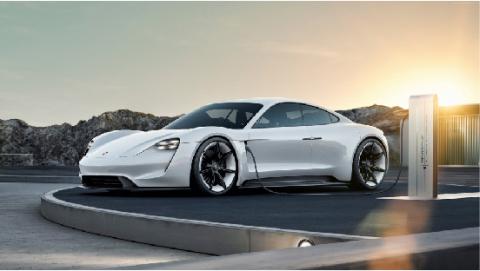
While the South African market presents unique challenges towards the adoption of electric mobility, what’s clear is that a move towards this form of emissions-free motoring is somewhat inevitable. Contributor Ian McLaren looks at where South Africa currently stands when it comes to e-mobility.
Ironically, the ongoing failures of Eskom when it comes to supplying South Africa with a stable supply of power is one of the smallest concerns when it comes to this market’s adoption of electric mobility. As is clear in regions of the world further down the road in terms of EV ownership, the management of battery charge in an all-electric vehicle is remarkably similar to that of keeping a mobile phone functional. That said, most South African’s are in a habit of plugging their phones into a wall socket through the night. Here, regardless of any scheduled 2 to 3-hour-long interruptions to a home’s power supply, the device is likely to be fully charged by the next morning. With the installation of a home wall charging box included within the purchase of nearly all of the battery-electric cars already on sale in South Africa, the reality is that most owners won’t actually need to rely on a public charging infrastructure over the course of a normal working week.
Despite this “top-up” trend when it comes to EV ownership, thanks to the works of companies the likes of GridCars, South Africa currently has one of the largest ratios of public charging stations – including within every 300 km on all three major routes, the N1, N2 and N3 – to EVs on the road, in the world.
With Volvo Cars the latest importer to include an all-electric derivative – the XC40 P8 – within its local portfolio, it’s becoming increasingly clear that despite the current challenges associated with government taxation and its effect on the pricing of EVs in South Africa, most mainstream manufacturers are under pressure to show intent when it comes to e-mobility. This as each brand’s respective deadline for the deletion of internal combustion engines from global production lines looms large.
With electric vehicles currently subject to import duties of up to 25% compared with around 18% for vehicle’s with an internal combustion engine, added pressure on the retail pricing of EVs in South Africa comes in the form of a 17% ad valorem (luxury tax) linked with the cost of the batteries fitted to these vehicles. It is currently cheaper for BMW to import a top-of-the-range X5 SUV into SA than it is bring in an all-electric i3 city car.
Led by its flagship iX range, BMW’s local EV portfolio is set to swell with the addition of an all-electric X3, a 4 Series Gran Coupé, a 7 Series and, in time, a new iX1 compact SUV. Keepers of the Mini brand since 2000, the next generation of products from this popular British brand is already confirmed for a completely battery-electric future.
Like its Munich-based compatriots, Mercedes-Benz recently confirmed it will offer five new “EQ” models in South Africa by the end of 2022. While the EQA, EQB and EQC are built on the same underpinnings as the combustion engine siblings with which they share their respective family names, the EQS and EQE introduce the brand’s all-new modular platform specifically designed to accommodate all-electric architecture.
Audi’s next generation of e-tron products are similarly built on dedicated modular platforms, including a so-called PPE setup that it developed in conjunction with fellow VWAG-owned manufacturer Porsche. While Audi has six e-tron models currently on sales in South Africa, a likely watershed moment in terms of customer interest will come in the form of the Q4 e-tron once it becomes financially viable for the brand to introduce it here. As for Porsche, while it already offers the impressive Taycan family of vehicles, it will look to the confirmed all-electric Macan SUV in 2023 to gain further traction within this popular segment.
Currently an easier “sell” for the abovementioned premium brands, once the necessary action is taken to address the taxation associated with the import of all-electric cars into South Africa, it’s likely brands like Kia, Hyundai, Ford, Volkswagen and even Honda will waste little time in introducing any number of compelling respective EV offerings.
A motoring journalist with more than 20 years’ experience, Ian McLaren will be compiling a series are articles documenting his learning curve when it comes to all things auction. Find him on Twitter, Instagram and TikTok at @IanMcLaren76.
These articles aim to offer insights only and in no way encourage reckless or hit-and-miss purchasing decisions.